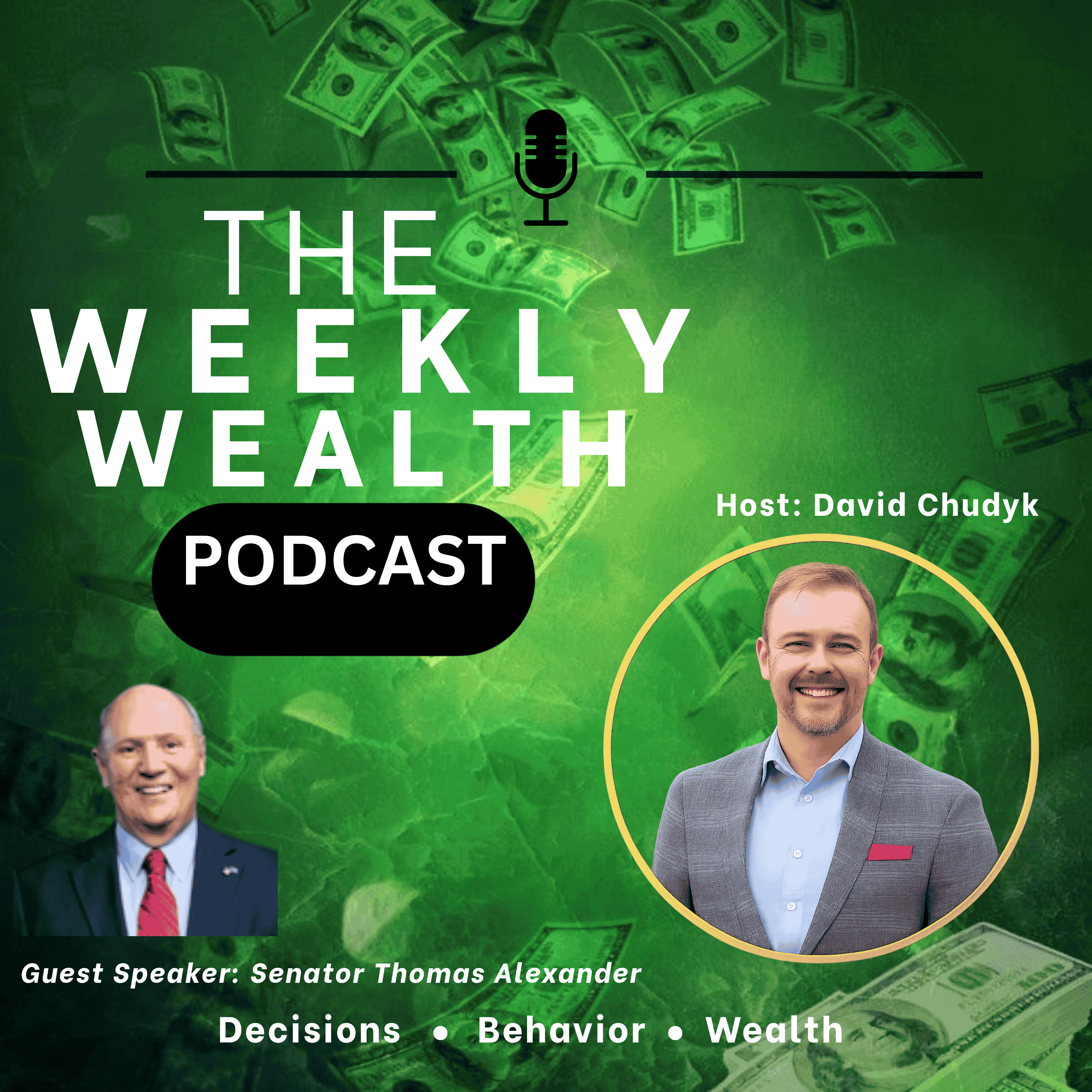
Ep 253: State Government 101: Business Growth, Budgeting & Real Issues in your state.


Schedule your VISION CALL with David Chudyk by visiting www.weeklywealthpodcast.com/vision
EPISODE DESCRIPTION
This week on The Weekly Wealth Podcast, we’re doing something we’ve never done before — we’re welcoming a South Carolina State Senator and the President of the SC Senate, Thomas Alexander, to break down how state government really works.
Most people only pay attention to politics at the national level… but the truth is, your state government affects your daily life in huge ways — from taxes, business growth, and technical college funding, to road infrastructure, public safety, and poverty initiatives.
In this episode, Senator Alexander gives us a behind-the-scenes look at how South Carolina operates, why the state remains competitive for major employers, what lawmakers are working on in 2026, and how everyday citizens can stay informed and get involved.
If you live in South Carolina (or honestly any state), this episode will help you understand what’s going on under the hood — and why it matters.
KEY TAKEAWAYS
✅ Why state government matters more than most people realize
✅ The Senate is 46 members total and districts represent ~115,000 citizens each
✅ The SC Senate makeup: 34 Republicans / 12 Democrats
✅ Why state politics can be less divided than the national level
✅ How South Carolina attracts major employers without “just paying companies” to come
✅ The difference between state-level support vs local government incentives
✅ Why a strong business climate benefits everyone:
“If companies are successful, citizens are successful.”
✅ How SC supports Main Street / small business owners (regulatory reform + pro-business policy)
✅ SC’s personal income tax has dropped from 7% → 6% in recent years
✅ The technical college system is a workforce engine (and a student loan solution)
✅ Apprenticeships + customized training programs that match employer needs
✅ The “poverty” conversation: local + faith-based + nonprofit partnerships matter most
✅ How state budgeting works + why SC’s balanced budget requirement is a big deal
✅ Infrastructure reality: SC maintains 40,000+ miles of state highways
✅ 2026 topics the legislature is actively working on:
- DUI law reform
- Regulatory reform
- Additional tax policy changes
- Vaping concerns in schools
- Unregulated THC beverages and safety concerns
✅ A strong reminder: you don’t have to vote party-line on every issue
✅ Wealth isn’t only money — it’s security, preparation, wise decisions, and quality of life
QUOTES WORTH REMEMBERING
“If companies are successful, then our citizens are successful.”
“The institution of the Senate is greater than any one of us.”
“We have a balanced budget requirement… how novel is that?”
“We want South Carolina to remain a special place to live, work, and raise a family.”
“Wealth is financial security — being responsible, living within your means, and preparing for the future.”
ACTION STEP FOR LISTENERS
If you’ve never paid attention to your state government, let this be the week you start.
✅ Learn who represents you
✅ Follow the issues that impact your community
✅ Get involved locally — even small participation creates real change
And remember: informed citizens build stronger communities.
HOW TO CONTACT SENATOR THOMAS ALEXANDER
📧 Email: thomasAlexander@scsenate.gov
📞 Phone: (803) 212-6220
WANT TO TALK ABOUT YOUR OWN FINANCIAL PLAN?
If listening to this episode sparked questions about your own wealth strategy — taxes, retirement, investing, or business-owner planning — I’d love to help.
🎯 Book a Vision Call with me (David Chudyk, CFP®)
This is a short, no-pressure conversation to help you:
- get clarity on your current financial situation
- identify blind spots
- talk through next steps
- see if working together makes sense
(Links and contact details below 👇)
www.weeklywealthpodcast.com/vision
ABOUT THE WEEKLY WEALTH PODCAST
The Weekly Wealth Podcast is where we talk about the mindsets, tactics, and strategies that help you build wealth — and keep it.
I’m David Chudyk, CFP®, and I work with:
✅ business owners
✅ high earners
✅ mass affluent families
✅ retirees and pre-retirees
We’re big on one thing here:
Better decisions. Better behaviors. Better wealth.
BONUS CONTENT RECAP
Politics is loud. Polarizing. Emotional.
So here’s the challenge:
✅ form your own opinions
✅ stay informed
✅ don’t blindly vote party line
✅ and if you’re a person of faith — remember “love thy neighbor” still applies even when they vote differently.
DISCLAIMER (keep this at the end)
The information contained herein—including, but not limited to research, market valuations, calculations, estimates, and other materials obtained from Parallel Financial and other sources—are believed to be reliable. However, Parallel Financial does not warrant its accuracy or completeness. These materials are provided for informational purposes only and should not be used for or construed as an offer to sell or a solicitation of an offer to buy any security.
Past performance is not indicative of any future results.
00:00 - Untitled
00:09 - Introducing State Politics
00:51 - The Role of State Government in Business Growth
11:53 - Impact of Technical Education on Workforce Development
16:56 - Addressing Poverty and Community Support
28:03 - Addressing Modern Challenges: Vaping and THC Regulation
31:55 - The Importance of Wealth in Life Decisions
I hope it's pretty evident that we've been working really hard to bring some heavy hitters as guests on the weekly wealth podcast as we start 2026.
Speaker AAnd this week we have a first, we have a state senator.
Speaker AWe're talking state government, we're talking policies, and hopefully just giving you an insight to how South Carolina works, which is my state, but it probably applies to most other states.
Speaker ASo I really hope that you enjoy this episode.
Speaker AWelcome to the weekly wealth podcast.
Speaker AI am certified financial planner David Chudick.
Speaker AI spend most of my days talking with business owners, the mass affluent and the high net worth about their money.
Speaker AWe talk about their financial dreams, we talk about their financial worries and we talk about the decisions that they know they need to make.
Speaker AThat is what this show is about.
Speaker BWe have a first today.
Speaker BWe have a state senator on today's podcast and we're going to talk about a little bit of the role of state governments, particularly South Carolina, but I think it might just generally apply to most states.
Speaker BTalk about some things that our state is doing to encourage business growth and maybe even some things that our state is doing to help the poverty situation.
Speaker BSo we have Thomas Alexander with us today, State senator of South Carolina.
Speaker BHey Thomas, how are you?
Speaker CDoing great.
Speaker CHope you're doing good today.
Speaker BSo tell me a little bit about.
Speaker BI always wonder, are people that get into public servanthood, are they crazy or what got you into being a representative in our state government in South Carolina?
Speaker CSometimes you question yourself about it, but I tell you I've enjoyed the Lord's blessed me.
Speaker CThe people have been good to me.
Speaker CPublic service was demonstrated to me by my parents early on in my life and it's opportunity to serve the community and to serve the people, people and make a difference in people's lives.
Speaker CI started on city council in Wahala, South Carolina, then was elected to the state House of Representatives and then have spent time, the last 30 years, starting 31 years actually in the state senate here in South Carolina.
Speaker CWe have 46 state senators in South Carolina.
Speaker CA district is about 115,000 citizens.
Speaker CWe continue to experience good growth here in South Carolina.
Speaker CThe population's growing, but at the same time we don't want to lose that culture.
Speaker CWe want to the things that make South Carolina a special place.
Speaker CFrom the mountains to the midlands to the coast.
Speaker CWe want to do our best to ensure those continue to make South Carolina a special place to live, to work and to raise a family.
Speaker BIt is now the state senate in South Carolina.
Speaker BHow is it divided Republican versus Democrat.
Speaker CThere are 34 Republicans and 12 Democrats.
Speaker CSo there's a total of 46 state senators in South Carolina.
Speaker CWe have a four year term that we all in a cycle that's a presidential cycle.
Speaker CSo that would be Next up in 2028.
Speaker CFrom that standpoint, we have rural and urban.
Speaker CAnd I think that's the thing about some issues that you find yourself being at odds from a position standpoint with some of your colleagues on one issue, but you find yourself working with them on another issue.
Speaker CAnd a lot of times those or sometimes they're political party issues, but a lot of times it's really rural versus urban and those demographics and dynamics that play into what is before us from that standpoint.
Speaker CSo I have the privilege have been elected by my colleagues and to be the president of the Senate.
Speaker CI'm only the second president of the South Carolina State Senate, and so I preside over the Senate as well as being one of the 46.
Speaker CWe are very ceremonial, very traditional, but we certainly also make sure that we have the proper decorum that we expect everybody to abide by and be courteous and do things in a proper format that serves the people of South Carolina extremely well.
Speaker BSo on the state side, we all know that federal government, there's a lot of politics and really party line division.
Speaker BDo you think on the state side the party lines are blurred a little bit more and maybe you get along a little bit better and work together.
Speaker CWell, we certainly work better together and we get along better.
Speaker CI think that's because we still interact with one another.
Speaker CAnd really you think about South Carolina and the size of South Carolina, we kind of still know each other or we know somebody that's in another community or there's some kind of a relationship there.
Speaker CAnd so many times we may have differences of opinion, but we do it in a very respectful manner.
Speaker CAnd again, we may be working with somebody on the next issue with them rather than being on the other side.
Speaker CSo there's just a lot of mutual respect from that standpoint.
Speaker CBut I do think that the body, the institution of this Senate is greater than any one of us as state senators.
Speaker CAnd we have a duty and responsibility to the citizens of this state to, to do the work.
Speaker CWe focus on public safety, we focus on education, whether It's K through 12 higher education, including the technical college systems.
Speaker CWe have a world renowned, if you would, technical college system here in South Carolina.
Speaker CAnd then our tax policy of making sure that we have competition, competition and that we're competitive not only with neighboring states, but around the country from that standpoint of providing a business climate that is conducive for companies to be successful here in South Carolina.
Speaker CBecause my philosophy is if the companies are successful, then our citizens are successful and our state are successful.
Speaker CIt's not one or the other, it's us working together from that standpoint.
Speaker CAnd we enjoy that success together.
Speaker BWe have BMW, we have Boeing, we have lots of international industries, we have I car, we have all of those things.
Speaker BIn what way?
Speaker BJust generally speaking, I don't know that we need specifics about any of them or maybe it'd be interesting.
Speaker BBut what role did state government play in getting some of those major industries to move to South Carolina?
Speaker BBecause they could be anywhere, right?
Speaker CThat's correct.
Speaker CAnd we find ourselves in a very competitive environment from that standpoint of attracting businesses and industry to South Carolina.
Speaker CBut obviously we have some incentives.
Speaker CWe don't just pay people though, to come here.
Speaker CThat those are incentives that they were investing in buildings or infrastructure that would serve long beyond any specific company.
Speaker CIf things happen to change from that.
Speaker BStandpoint, that basically equate to tax cuts, they pay less property taxes or things like that.
Speaker CThat's up to the local governments has the flexibility to get into a fee agreement with with them.
Speaker CFrom that standpoint, the state does not do that.
Speaker CSo really to your point though, that's a good point.
Speaker CThat it's normally a partnership with the state and the Department of Commerce and our governor and the General assembly providing funds to help with the bigger infrastructure aspect.
Speaker CAnd then it's up to those local communities at the end of the day, if they can come up with an agreement that is successful to bring in that company to the area.
Speaker CAnd you pointed out we have a lot of great companies, manufacturers here in South Carolina.
Speaker CAnd it's not just those manufacturers, it's the suppliers to those manufacturers.
Speaker CSo it's a very far reaching indirect benefit.
Speaker CAnd in our communities there in Oconee county, we have a great diversity.
Speaker CYou've got Duke Energy, that has three nuclear reactors, but we have basf, we have Snyder Electric, we have Itronic and many other companies that call Oconee county home.
Speaker CAnd that gets to the point that one of the things that gives me the greatest pride is that when we have an existing company decide to expand their operation and our community, because that tells me that one, yes, the business environment is good and they can be successful.
Speaker CBut really it speaks to me is about the people in our community and the work ethic and the quality of the products that they're Putting out.
Speaker CBecause most of the time these expansions of these companies are competing from different locations within their own corporate setting.
Speaker CSo to me, that demonstrates that our people have the right training, we have the workforce that is there for them for the companies to be successful and to want to be even a greater part of our community.
Speaker CSo whether that's in Oconee county or whether it's down on the coast or anywhere in between, those to me are the points that really demonstrate that we are having an impact and providing for our people to have jobs right here at home.
Speaker CThey're not having to look to go elsewhere to find a job and find an employment.
Speaker BYeah, good paying jobs benefit everybody for sure.
Speaker BThere's no question about that.
Speaker BNow what about the Main street businesses, the mom and pop restaurant with five employees or anything like that?
Speaker BWhat are some things that, that South Carolina legislature is doing to help those?
Speaker BBecause obviously my office, I'm not Boeing, I'm not BMW.
Speaker BBut what are some of the things that, that you're doing to help us to be successful?
Speaker CWell, we certainly have a division for small business at the department, Department of Commerce and then we work with the local governments from that standpoint.
Speaker CHaving been in small business myself, I was in small business for 40 years.
Speaker CI know firsthand, I think a lot of it too, what we're dealing with right now is with regulatory reform that we hear consistently about how government can be a burden and the time consumption for getting permits and things of that nature.
Speaker CSo while there's not a direct financial benefit, there is an opportunity as we work to expedite those processes.
Speaker CIt gets people in business quicker, gives them the opportunity to be successful quicker from that standpoint.
Speaker CAnd we do have, we've reduced the business personal tax on businesses.
Speaker CWe've given some other flexibility.
Speaker CWe, we've.
Speaker CAnd then certainly with taxes in general, we've reduced, reduced the personal income tax from 7% to 6% over the last three years.
Speaker CThat's really put a billion dollars back into the pockets of the individuals rather than into the coffers of the state for spending from that standpoint.
Speaker CSo there's just.
Speaker CAnd we continue to look at ways that we can support those small businesses.
Speaker CBut I think one of the ways too though is, is again with those manufacturing companies and their suppliers coming also provides that avenue for those small businesses to have them as businesses.
Speaker CAnd I think we've put a greater emphasis on companies that come here to use local suppliers and local companies in doing the work for them, whether it's construction or whether it's anything across the spectrum from that standpoint is to support that local community.
Speaker BAnd when people have good jobs they can afford to go out to eat, they can afford all of the things.
Speaker BAnd I think it trickles down and, and it helps everybody.
Speaker CNow what I like to refer to as a good quality of life that we're absolutely improving the quality of life of all of our citizens as we, we help some, it helps everyone.
Speaker BNow one thing that I think helps quality of life for a lot of young people and even some older people is the tech school system.
Speaker BThere's a lot of talk about the student loan crisis and quite frankly I don't know that everybody needs a four year degree.
Speaker BSo what is your role?
Speaker BWhat is the state legislature's role?
Speaker BWith you mentioned we have a world class technical college system.
Speaker BLet's talk a little bit about that and how students can take advantage and some of those origins.
Speaker CAnd again I think that's one of those areas that really unites us.
Speaker CAnd you talk about things that are bipartisan things and that nature.
Speaker CI think the support for our technical college system is something that's embraced across party lines in the aisle because we understand the value to our citizens whether it's someone just getting out of high school there in Oconee county there's a partnership between Tri County Tech and the Hamilton Career center so that you could.
Speaker CAnd those campuses are next door.
Speaker CActually it's a model, it's a beautiful facility.
Speaker CIt is and it's been replicated around.
Speaker CIt's one of the first in the country that had those facilities co located and stuff.
Speaker CSo we're seeing other places duplicate what's being done there.
Speaker CWe've expanded the apprenticeship program which is done in conjunction with the Department of Commerce, with the technical colleges and with our local industry so that individuals can be getting the training at the technical college and then also being working and getting paid for that training from that standpoint.
Speaker CAnd then we also have other programs that really we've identified and it's always changing of where the need is for employees.
Speaker CAnd we from an industry standpoint we customize.
Speaker CWe or the technical colleges customize a program of training so that it will be specific to the needs of that company or that business.
Speaker CAnd that could be any type of small business talking about what we do across the board from small businesses to large businesses.
Speaker CBut we can customize the technical colleges customize that training and if they're going to have a job in that field then there's no cost to that student.
Speaker BWow.
Speaker CAnd we have other programs where there's no cost to the student to go to the technical colleges.
Speaker CAnd so it's really a win win.
Speaker CAnd it's making education beyond high school affordable and without.
Speaker CTo your point, you mentioned earlier about student loans, it's making it weird they don't have the student loans.
Speaker CThey're getting into the workforce source quicker becoming taxpayers.
Speaker BAbsolutely.
Speaker BAnd I've, I've known some people that have had large thousand fifteen hundred dollars per month student loan payments.
Speaker BAnd that's just, that's stifling and that's.
Speaker CHard to deal with and it really is.
Speaker CAnd then so many times that's more.
Speaker CIt's been a private sector company that actually has loaned them that money and sometimes it's been to institutions that unfortunately didn't.
Speaker CDid not fulfill their obligation from that standpoint.
Speaker CSo that has been an issue.
Speaker CNow we have had some programs here in South Carolina that helped specific vocations that need assistance.
Speaker CI'm thinking there's been some teacher programs.
Speaker CThere's been programs obviously for doctors and things of that nature that can be some loan forgiveness programs that if they stay in a rural area for a certain period of time, then there's some contributions that are made to paying down their student debt.
Speaker CIs a way to have partnership with the citizens and making sure that some of these professionals are getting into the communities, especially with our educators, that you have certain areas of the state where they really have a need for additional teachers and it's an incentive for them to go into those areas or into those disciplines, whether it's math or English, to get them to have the experience that they're needed to go get into the classroom.
Speaker CSo we, and we change that based on what those needs are from maybe not year to year, but certainly over a several year period of time.
Speaker BLet's move directions a little bit.
Speaker BPoverty is something that, that nobody likes, nobody wants.
Speaker BIt'll probably always to some extent be part of just society.
Speaker BLet's talk a little bit about state legislators, state government's role in reducing and eliminating poverty.
Speaker BThis is something I drive past a homeless shelter most days and it's sad.
Speaker BAnd so what are some initiatives and what are some ways that the state is looking to make that a little less burdensome on society?
Speaker CWell, we've, we certainly have partnered with some of the nonprofits.
Speaker CI think that it's important to your point that as we try to support individuals in poverty is that it really starts in those local communities.
Speaker CIt's hard for us to do something from Columbia.
Speaker CIt really has to be a partnership with that local community that sees the needs of their local community.
Speaker CI think of some of the faith based organizations that we have in our community as well as other nonprofits that are meeting some of those needs.
Speaker CYou mentioned the homeless shelter, the food, our daily bread that provides meals, the food bank.
Speaker CBut then there are those support networks that we have within that are supported by the state, like the Department of Mental Health that has a office right there in our community and has offices in all the different, virtually all the different counties across the state.
Speaker CThat it's a partnership with that local community that we provide the employees and the support services staff, whereas that local community provides the building.
Speaker CFrom that standpoint, we have the support for our disabilities and special needs that has a local component but is funded extensively at the state level.
Speaker CAnd then there's the alcohol and other drug abuse center that is working on the ground level there in the communities and across the communities of South Carolina to help people get back on track.
Speaker CThen of course there's the VOC rehabilitation system that's a federal, state and local initiative that's helping people get the training to have them get out of where they've had some unfortunate situations, whether it's been addiction or work related to get them back on the track to employment from that standpoint.
Speaker CSo there are a lot of resources and there's a lot of different organizations that are continuing to fine tune as things have changed from that standpoint too.
Speaker CAnd we continue to dedicate funding.
Speaker CWe also have the local department of Social Services that helps with the foster care and supports programs for the children from that standpoint.
Speaker CAnd foster parents that are again to me just angels on earth that take children into their home and to help and that they get the support through the Department of Social Services.
Speaker CWe provide funding to those families to help with the additional costs that they have to deal with someone else in the home from that standpoint.
Speaker CBut even with all of those resources, there's more that needs to be done.
Speaker CAnd to your point, we continue to see folks that live in poverty, we see folks that are homeless and we work with local law enforcement as well too, from that standpoint and trying to provide initiatives that will address specifically those needs that they see on the front line.
Speaker BAnd one thing I feel wholeheartedly is government can provide some direction, some resources.
Speaker BBut I don't think government will ever be the answer to anything, but especially poverty.
Speaker BIf there's something in your heart personally that you feel a burden, go help and me too, and give generously help we can't solve all problems.
Speaker BBut there's probably one person in my community I can help.
Speaker BAnd if we all did that, I think that makes a big dent in poverty.
Speaker CNo, no question about it.
Speaker CAnd we do have the generosity of the people.
Speaker CAnd I think, like to your point, there's great programs that are going on and people wanting to help people get out of their situation from that standpoint.
Speaker CAnd in the faith based community, our churches are another tremendous resource that are there that see those needs and are helping those citizens.
Speaker CAnd a lot of times it's helping them transition from a very unfortunate situation.
Speaker CI hear on occasion how people for some reason or another have had a tragedy in their life that they never were expecting, that turned their life upside down and they just need that support and that help can happen for a limited time.
Speaker CThat's right.
Speaker CBy the grace of God, there goes us from that standpoint.
Speaker CAnd so there's always something to your point that if you've got a heart for service, there is a place for you to serve and to make a difference and in not only one person's life, but many lives.
Speaker BAll right, so you mentioned that the state income tax rate had gone from seven to six and I think that's awesome.
Speaker BLike you, I probably also hate paying taxes, but I know they're necessary, they need to happen.
Speaker BBut how can I trust you and your colleagues that my state income tax is being accounted for properly and excessive waste is not happening?
Speaker BAnd let's just talk a little bit about the budgeting process in general.
Speaker BOn is that the Senate that, that oversees that?
Speaker CIt's actually the House and the Senate and we come together and we have to coordinate and work with the governor and there's always room for improvement.
Speaker CAnd we actually have an oversight committee in the Senate and there's an oversight committee.
Speaker CAnd the House of Representatives is always looking at agencies and how we can improve their core functions of what they are about out from that standpoint and through the budgetary process.
Speaker CThe budget on a yearly basis goes through subcommittee, it goes through full committee, goes through debate on the floor, and then it makes it to the governor's desk where he has the ability.
Speaker CSouth Carolina is one of the states where the governor has a line item veto in the budget.
Speaker CAnd I think that's good prudent fiscal responsibility from that standpoint.
Speaker CAnother thing that we have here in South Carolina is a requirement through the Constitution that we have a balanced budget.
Speaker CHow novel is that?
Speaker CYou actually have to balance your budget and live within your means.
Speaker CWe continue to Give.
Speaker BGeez, who figured that out?
Speaker CYeah, exactly.
Speaker CAnd it has served us extremely well.
Speaker CAnd we are better off as a result of that.
Speaker CAnd we are putting money back to the taxpayers, not only through the income tax reductions, but there are several other things that we've done that some problems.
Speaker CProperty tax relief for owner occupied.
Speaker CWe provide for citizens that are 65 and older.
Speaker CThere's the homestead exemption and there's several other things from that standpoint that we do.
Speaker CBut at the same time, we are doing more set aside of funds for a rainy day.
Speaker CWe have a minimum of 10% of our revenue is set aside because over the years, it's not a question of if, but when you're going to have an economic downturn.
Speaker CAnd so after 2008, we even increased those reserves more stringent so that we could make sure that we are doing our best to the ability that we have to fund rainy days.
Speaker CThat equates to us having a very strong credit rating.
Speaker CWe are one of the highest rated states in the country and we, we'll continue to make sure we have sound principles and policies in place to do that.
Speaker CAnd at the same time, we're continuing to put additional funding into our transportation system.
Speaker CThere is a tremendous need.
Speaker CSouth Carolina has one of the largest per capita highway systems in the country with over 40,000 miles in South Carolina of state highways.
Speaker CAnd we are, while we have a dedicated source of funding, we've been putting additional funding to help with the safety of our bridges and to help expedite some other projects because the conditions of our road have been neglected for a long period of time because of the amount of resources that are not being dedicated to those.
Speaker CAnd so there's a lot of catch up that we have to do there.
Speaker CAnd we're putting, and the governor's put forth another plan to even put additional funds.
Speaker CAnd that's another thing in our area that we don't necessarily think about being in the foothills of the mountains.
Speaker CWe have a lot of creeks, we have a lot of streams that roads, regardless of the size of those sizes of those roads and the traffic on those roads have to go over bridges of some sort.
Speaker CAnd so we've had, we have a disproportionate share of those that need to be addressed.
Speaker CAnd so by expediting some of those funds, we'll be able to do that as well.
Speaker BOkay, so what are some of the topics that maybe your constituents and citizens of the state might need to or want to contact you or your staff or their representative about?
Speaker BYou hear all the time I'm going to write my Congress, I'm going to write what are some things that you or your team might be able to help with some somebody with individuality, and that's it.
Speaker CAnd one of the greatest things that I enjoy is opportunity for constituent service and trying to help people.
Speaker CIt's one thing to be about making policy, but.
Speaker CBut a lot of times people just don't know where to turn in government and they just.
Speaker CAnd so try to be a resource.
Speaker CSo whether it's something that's in our domain or maybe it's at the.
Speaker CThe local level, we try to give guidance and direction to citizens to assist.
Speaker CWe have some initiatives now going on.
Speaker COur legislative session starts the second Tuesday in January and goes to the second Thursday in May.
Speaker CSo for the next four to five months, three days a week, we'll be in session.
Speaker CWe've got initiatives.
Speaker COne of the initiatives that we're dealing with to strengthen our DUI laws, driving under the influence laws in South Carolina with the intent is to lower the number of, of traffic fatalities on our roads that are being impacted because of a drunk driver on the road.
Speaker CSo we're making strides to improve those and working with law enforcement to address those.
Speaker CAgain mentioned regulatory reform earlier, we're doing additional work in that arena as well to try to streamline and reduce the number of regulations.
Speaker CSo many times a regulation was put into place, let's say 20 years ago now.
Speaker CYou know how much things have changed in your business, right, in 20 years?
Speaker BAbsolutely.
Speaker CChanged in government as well.
Speaker CAnd so a lot of times it's going back and doing that reset and making sure that they, those regulations comply with where we are in society of today.
Speaker CWe're looking at additional tax policy across the board.
Speaker CWe mentioned the income tax, there's business, property taxes that we're looking at, at maybe trying to streamline from that standpoint.
Speaker CAnd really just our overall tax policy is an area that we're working on.
Speaker CAnother area that two areas that we are addressing is dealing with vaping.
Speaker CThat's a relatively new product that's been out there.
Speaker CIt's unregulated.
Speaker CWe are hearing from the schools and from parents, the number of students that are vaping in schools and the number of those devices that are being confiscated.
Speaker CSo you have that on the one side, and then on the other side, you have these THC drinks that sprung up over the last few years that are completely unregulated as to the size of the drink, to the content of the drink, the quality of the product in the drink to the age of, of someone that can have access to those.
Speaker CAnd so those transpired because that there was nothing that envisioned those products being on the market.
Speaker CAnd so we find ourselves now having to go back and try to say what is the right policy on those and trying to protect our young people from the abuses that they're seeing in that regard.
Speaker BYeah, it must be hard balancing freedom with protection.
Speaker BAnd nothing is.
Speaker BThere's always a gray area and some, maybe nothing's always, always black and white.
Speaker BSo I definitely do not envy your position and having to make some of those decisions, but I know that they need to be made.
Speaker BNow, for those watching on, on, on YouTube, where are you physically right now?
Speaker BThat is one of the cooler backgrounds that I've seen from a podcast guest.
Speaker CYeah, so I mentioned as a state senator, I'm one of 46 state senators.
Speaker CSenate district number one is all of Oconee and the greater Clemson area of Pickens County.
Speaker CSo I'm actually sitting on the Senate floor.
Speaker CWe're not in session today.
Speaker CAnd so I'm sitting at my desk that right here, which got special permission to be able to have this recorded from my desk here and to have the opportunity to be a part of this program sitting here.
Speaker CIt's a very historic chamber.
Speaker CWe did renovations to the whole state Capitol some 30 years ago.
Speaker CAnd it's really.
Speaker CI would encourage people to come and visit their state house and whether they're here in South Carolina or go to their state capitol, wherever it is where government is being conducted from that standpoint.
Speaker CAnd now here we are to that point of 2026, the 250th anniversary of the founding of our country.
Speaker CAnd it really takes on significant roles here in South Carolina as we are one of the 13 original colonies.
Speaker CAnd we have a great tradition.
Speaker CWe have a 250th anniversary commission that's been in place here at the state level.
Speaker CAnd most counties have their own 250th anniversary commission.
Speaker CI've heard it said.
Speaker CI don't know who to attribute this to that the revolution May was started in Massachusetts, it may have ended in Virginia, but truly was won in South Carolina because of the number of skirmishes and the battles that were conducted right here on the soil in South Carolina.
Speaker CSo we have that rich and proud history of heritage here in South Carolina.
Speaker CWe hold it very near and dear to our hearts.
Speaker BWho knew?
Speaker BWho knew South Carolina was that that important in the revolution?
Speaker BWell, Senator Thomas Alexander, I'm honored to have you on the show.
Speaker BThis has been fascinating.
Speaker BIt's really just an interesting conversation and I want to close with the same question I ask all guests.
Speaker BWe're the weekly wealth podcast and I'm a financial advisor.
Speaker BAnd our show, we talk about the mindsets, the tactics and the strategies that can help you to build and maintain wealth.
Speaker BSo Thomas Alexander, what does wealth mean to you?
Speaker BWhat does it mean to you, your family and the people in your life that you love?
Speaker CI think wealth to me is just beyond the wealth of friends, is the wealth of financial security, of trying to be responsible and trying to live within or not trying, but living within your means and preparing for the future, making sure that you're meeting those expected and unexpected demands that will come from the future and then just investing wisely.
Speaker CI appreciate the fact that you put this program together and for your the work and the clients that you have that depend on you and the opportunities that we all have.
Speaker CAnd I think that's it, that, that that is a government.
Speaker CWe want the wealth of our people to be a opportunity for them to succeed in whatever it is that they want to succeed so that they can have a better quality of life that we mentioned to it, that they can take care of their family, the responsibilities and have a great opportunity to live and to work and enjoy life the way that they want it to be.
Speaker CBut it takes resources and resources mean wealth.
Speaker CAnd we just need to make sure that we do it wisely and depend on good folks that can give us good.
Speaker CThat's the thing about it.
Speaker CI have to depend on staff and others that give good advice.
Speaker CI think it's important for us all to look to folks to give us good advice to help us in any of the decisions that we're making in life's journeys.
Speaker BYep.
Speaker BOn our own we tend not to make the greatest decisions, but with wise counsel we definitely tend to make make better decisions.
Speaker BSo really appreciate this.
Speaker BIf any of your constituents needed to contact you, how would they do that?
Speaker BOr honestly, how would they find out who their senator or representative is?
Speaker CYeah, we have a great website here in South Carolina for the overall General assembly.
Speaker CBut for me, the easiest way two ways to contact me.
Speaker CThomas alexandercsenate.gov It's a very simple direct email address.
Speaker CThomas alexandercsenATE.gov and I like the old fashioned way too.
Speaker CBy telephone I got connected to my office here is 8032-1262-2080-3212-6220.
Speaker CThose are the most direct ways to be able to contact me personally.
Speaker BPerfect we will put that in the show notes.
Speaker BAll right, everybody.
Speaker BI hope this was an interesting look into South Carolina state government and probably gives you a little bit of an idea of what's happened in your own state at the state level.
Speaker BIf you're not in South Carolina, I encourage you to be involved.
Speaker BI encourage you to be informed.
Speaker BAnd yeah, until next episode, I wish, wish everybody a blessed week.
Speaker BThank you, Senator Alexander.
Speaker CThank you.
Speaker CIt's a pleasure to be with you.
Speaker AAnd here is this week's bonus content for this episode.
Speaker AWe talked today with Senator Thomas Alexander.
Speaker AAnd if you watch the news at all, especially at the national level, I think politics is very polarizing lately.
Speaker BSo here's what I would ask you.
Speaker AMake sure you're forming your own opinions.
Speaker AMake sure, I don't know, maybe we don't have to vote across party lines every time.
Speaker ASometimes it might actually be okay to agree with one or two of the policies of the other party.
Speaker AAnd remember, if you're a believer like me, love thy neighbor even means somebody who votes differently.
Speaker AOkay, just my two cents.
Speaker AHave a great day.
Speaker AThank you.
Speaker DThe information contained herein included but not limited to research, marketing, valuations, calculations, estimates and other materials obtained from Parallel Financial and other sources are believed to be reliable.
Speaker DHowever, Parallel Financial does not warrant its accuracy or completedness.
Speaker DThese materials are provided for informational purposes only and should not be used for or construed as an offer to sell or a solicitation of an offer to buy any security.
Speaker DPast performance is not indicative of any future results.
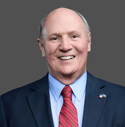
Personal Information
Businessman; Owner, Alexander's Office Supply
Born July 25, 1956 in Seneca
Son of the late Virginia C. and Claude N. Alexander
Anderson College, A.A., 1976
Clemson University, B.S., 1978
Married to Lynda Gibson
President, Operator, Oconee Office Supply
President, Operator, Cleveland Gospel Supply
Past Sunday School Superintendent, 1979-84
Member, Board, Blue Ridge Bank
Board of Deacons, Walhalla Presbyterian Church, 1980-82, 1984-86, Chairman, 1985 and Session 1987-90, Clerk
Walhalla Lions Club, President, 1984-85
Lion of Year, 1984-85
Walhalla Sertoma Club, President, 1982-83
Board of Directors, Walhalla Chamber of Commerce, 1980-83
Board of Directors, Walhalla Downtown Association, 1985-86, Vice President
Board of Directors, Carolina Office Products Association, 1986-90


